How India’s GCC Offices Must Support a Truly Multigenerational Workforce
Why this matters?
India has become the global hub for Global Capability Centres (GCCs)—housing engineering, analytics, finance, R&D, and leadership teams for multinational corporations. What is often overlooked, however, is that these GCCs now bring together four generations under one roof.
Baby Boomers and Gen X leaders, senior Indian professionals with decades of experience, Millennial managers, and Gen Z employees entering their first formal workplace all coexist in the same environment.
Workplace design has therefore moved beyond aesthetics or efficiency. It has become a strategic enabler of productivity, retention, and leadership continuity.
The Indian GCC reality (not a global copy-paste)
Most global workplace models originate in Western markets, where hybrid work is dominant, density is lower, and individual autonomy is high.
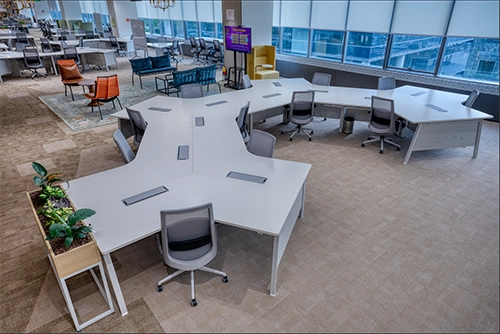
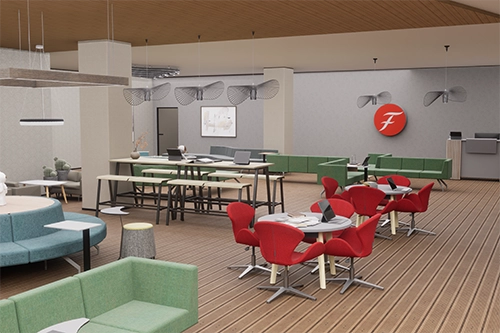
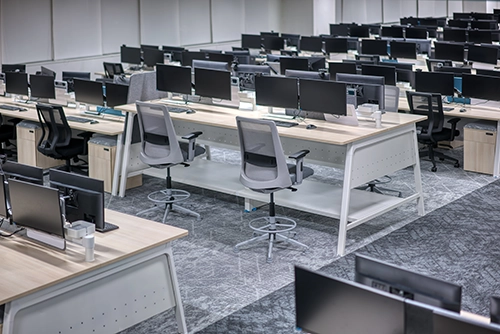
Featured Project – Meesho, Bengaluru
Products Featured – Synergy Workstation, Amaze Chairs, Lounge furniture by Featherlite
Indian GCCs operate very differently:
Higher in-office attendance
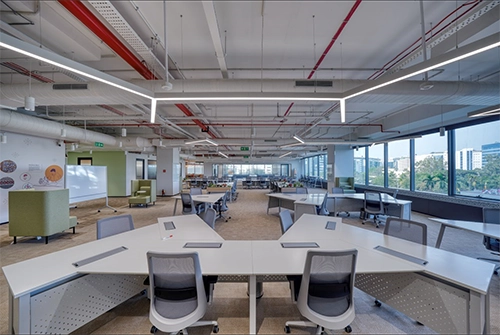
Larger, denser floorplates
Longer working hours
Strong mentorship and hierarchical cultures
In this context, design must reduce friction, not introduce novelty. The goal is not to impose one way of working, but to support multiple workstyles simultaneously.
One office cannot mean one way of working
Different generations rarely disagree on outcomes. They differ on how work happens best.
Some employees need quiet and predictability to perform at their peak. Others thrive on visibility, interaction, and energy. Managers need spaces for coaching and reviews, while project teams need areas that can adapt quickly.
High-performing GCC offices respond by offering parallel work settings:
Focused work areas
Open collaboration zones
Enclosed meeting spaces
Informal breakout and social areas
Choice is no longer a perk—it is essential infrastructure.
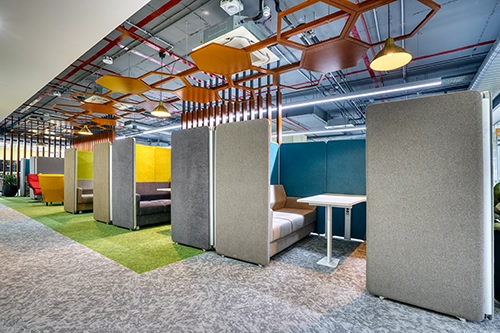
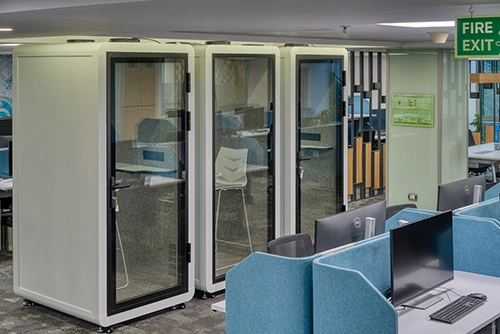
Featured Project – Salesforce Bengaluru
Products Featured – Genesis Pod by Featherlite
Focus without going backwards
The open office was designed to increase collaboration, but in dense Indian workplaces it often leads to distraction and fatigue—especially for senior professionals and roles requiring sustained concentration.
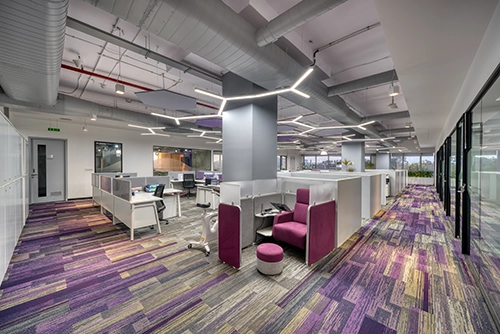
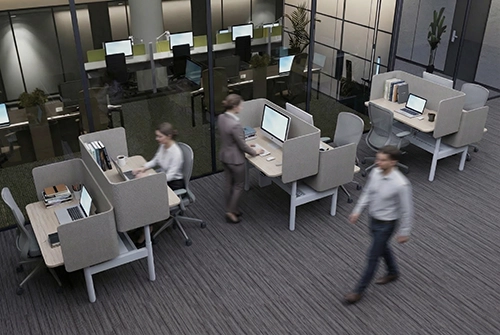
Featured Project – WS Audiology, Bengaluru
Products Featured – Genesis Recharge & Colours Workstation by Featherlite
This has led to a quiet but important shift:
Greater emphasis on acoustic control
Zones for deep, uninterrupted work
Balance between openness and privacy
This is not a return to rigid cubicles. It is an evolution toward intentional focus, designed into the workplace rather than fought for within it.
Collaboration is social, not just spatial
In India, relationships precede performance.
Much of the most valuable learning happens outside formal meetings—through observation, informal conversations, and mentoring.
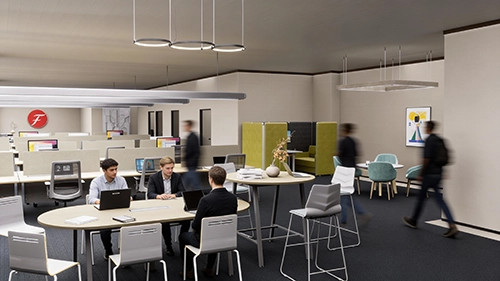
Products Featured – Flora chairs, Switch high table, Boomerang, F series sofa by Featherlite
Workplaces that support multigenerational teams therefore invest in:
Informal lounges and breakout spaces
Shared tables near circulation paths
Social zones that encourage natural interaction
These spaces act as mentorship engines, enabling junior employees to learn organically and senior leaders to remain accessible without formality.
Technology must feel intuitive
GCC offices are inherently technology-driven, yet technology can easily become a barrier if it adds complexity.
Featured Project – Nasdaq, Bengaluru
Products Featured – HAT, Helix Chair, Hüssh! Pod by Featherlite
Successful workplaces prioritise:
Simple, consistent meeting experiences
Equal participation for in-room and remote attendees
Clear acoustics and sightlines
Furniture that supports technology without dominating the space
When technology is intuitive, generational differences fade into the background and collaboration becomes effortless.
Flexibility with structure
While flexibility is important, Indian workplaces still value clarity and order. Spaces that are too fluid can feel disorienting, particularly in large organisations.
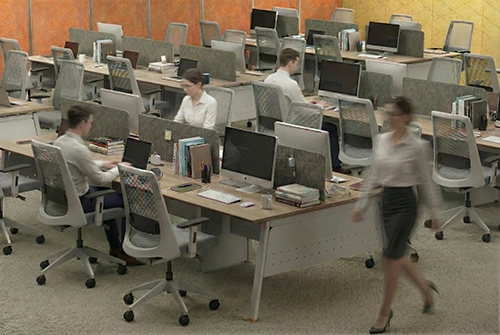
Featured Project – Meesho, Bengaluru
Featured Project – Moss Adams, Bengaluru
Products Featured – Synergy workstation, Colours workstation, Amaze Chairs by Featherlite
The most effective GCC offices balance adaptability with structure:
Flexible layouts with clear zoning
Visual cues that signal how spaces should be used
Furniture that can evolve without disrupting the environment
Flexibility works best when it feels intentional, not improvised.
Designing for people, not age groups
Designing for multiple generations is not about labels or stereotypes. It is about comfort, dignity, and choice.
Products Featured – Synergy workstation, Amaze Chairs by Featherlite
Ergonomic support, visual calm, intuitive layouts, and inclusive spaces benefit everyone—regardless of age.
When people are comfortable, they collaborate better. When they collaborate better, performance follows.
The takeaway for multinational GCC leaders
India is no longer just an execution destination. It is a leadership and innovation hub.
The workplaces created here will shape culture, retention, and future leadership pipelines for years to come.
The most successful GCC offices are not designed for Boomers, Gen X, Millennials, or Gen Z.
They are designed for people— and for performance across time.