
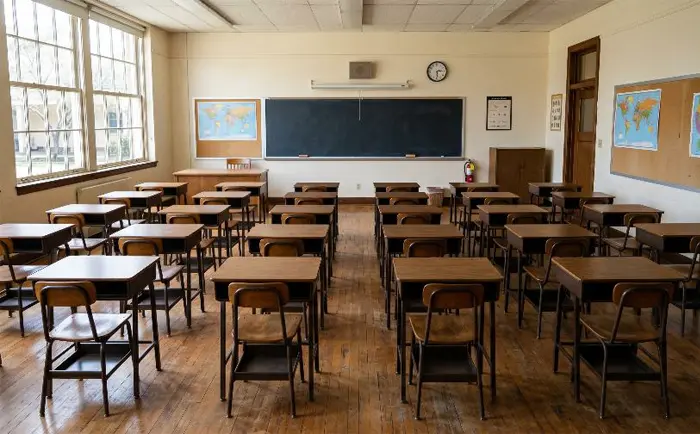
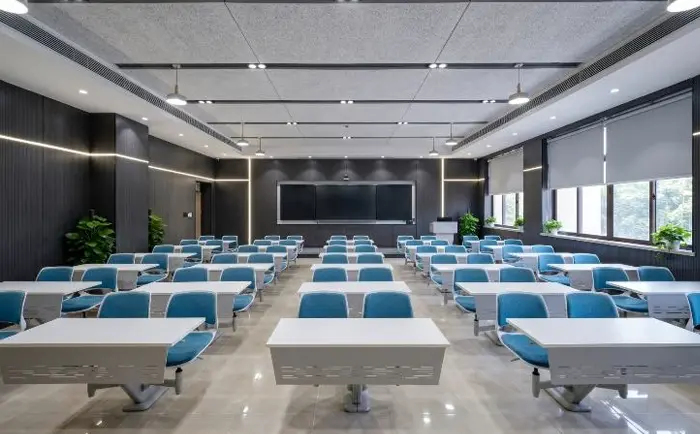
Walk into most classrooms built a few decades ago, and you’ll likely see the same setup: rows of desks facing the teacher. This arrangement was designed for an era when learning was largely lecture-driven, information flowed in one direction, and students were expected to listen, absorb, and reproduce knowledge.
Today’s learning environment looks very different.
Students are expected to collaborate, solve problems, think critically, participate in discussions, and work with technology. Educational institutions are increasingly focusing on active learning, experiential learning, project-based assignments, and peer interaction.
The question is no longer whether classroom design matters. The question is: Does fixed seating still support the way students learn today?
Why Fixed Seating Became the Standard
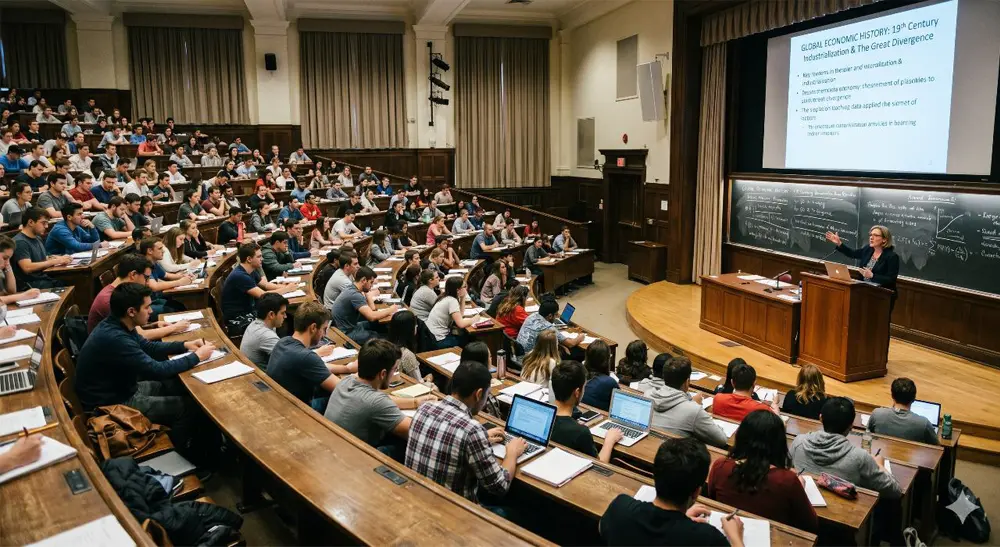
Traditional classroom layouts were created to support efficiency.
Rows of desks offered:- Clear visibility of the teacher
- Structured classroom management
- Maximum seating capacity
- Standardized learning environments
For decades, this model worked well because teaching methods were relatively uniform. The teacher was the primary source of information, and students were expected to learn individually.
But education has evolved significantly since then.
What Has Changed in Learning?
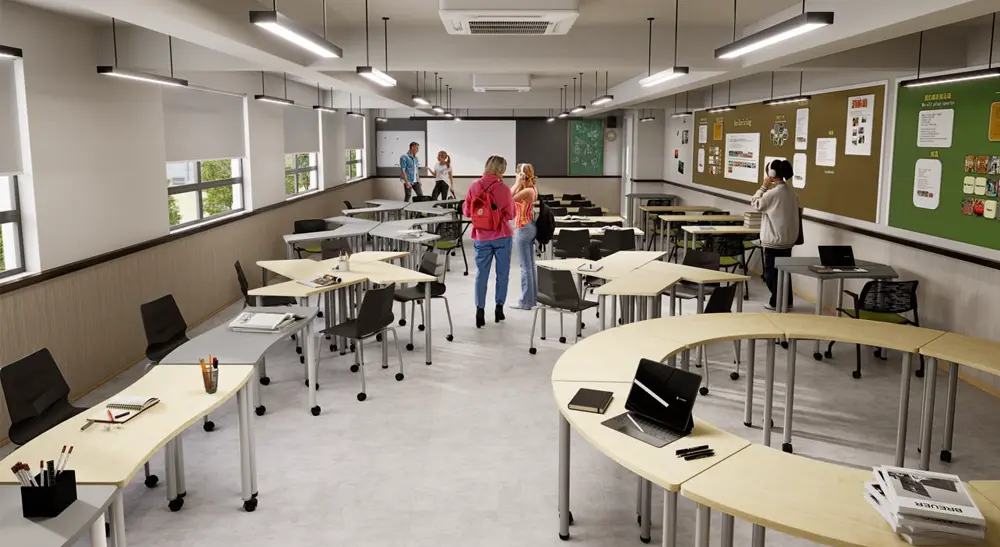
Modern education emphasizes skills that go beyond memorization.
Students today are expected to:- Work in teams
- Present ideas confidently
- Collaborate on projects
- Engage in discussions
- Adapt to different learning formats
- Use digital tools effectively
In many ways, today’s classrooms are preparing students for modern workplaces, where communication, collaboration, and adaptability are essential.
However, many classrooms are still designed for a teaching model that no longer dominates education.
This creates a gap between how students learn and the spaces in which they learn.
What Fixed Seating Does Well
Before dismissing traditional layouts entirely, it’s important to recognize their strengths. Fixed seating continues to work well for:Large Lectures
When the primary objective is delivering information to many students at once, fixed layouts remain effective.
Structured Assessments
Examinations and standardized testing often require controlled seating arrangements.
Classroom Management
Fixed layouts make supervision and organization easier, particularly in large classrooms.
Space Efficiency
Rows of desks can maximize seating capacity within limited floor space.
For these reasons, fixed seating still has a place in educational environments.
The challenge arises when classrooms are expected to support a wider variety of learning activities.
Where Fixed Seating Falls Short
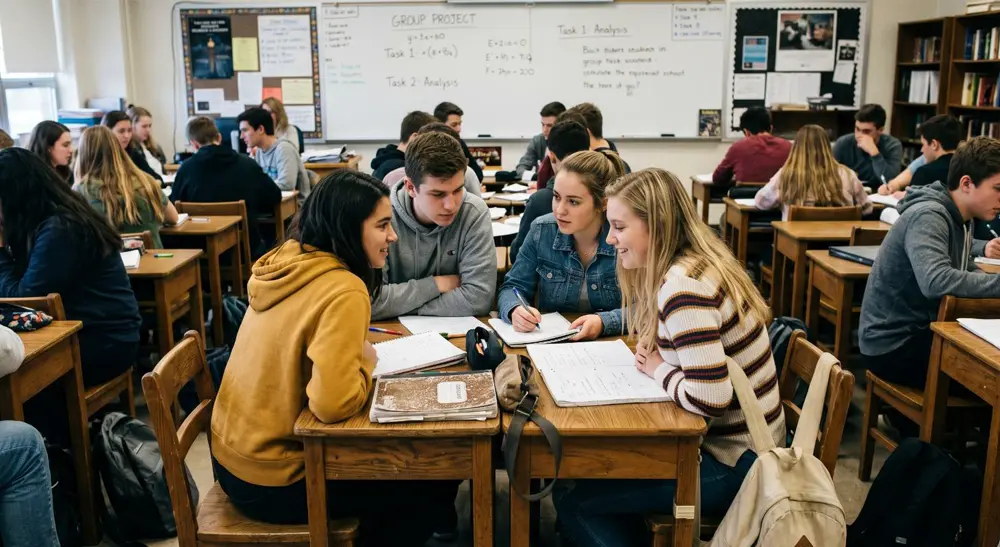
Limited Collaboration
Group discussions often require students to move chairs, rearrange desks, or work in awkward positions.
This disrupts the flow of learning and discourages interaction.
Reduced Student Engagement
When every student faces forward for every activity, learning can become passive rather than participative.
Students become observers rather than contributors.
Lack of Adaptability
A lecture, workshop, group project, presentation, and brainstorming session all require different spatial arrangements.
Fixed seating supports only one mode effectively.
Difficult Technology Integration
Modern classrooms often use laptops, tablets, interactive displays, and collaborative digital tools.
Static layouts can make technology-enabled learning more difficult to implement.
Why Flexible Classrooms Are Gaining Popularity
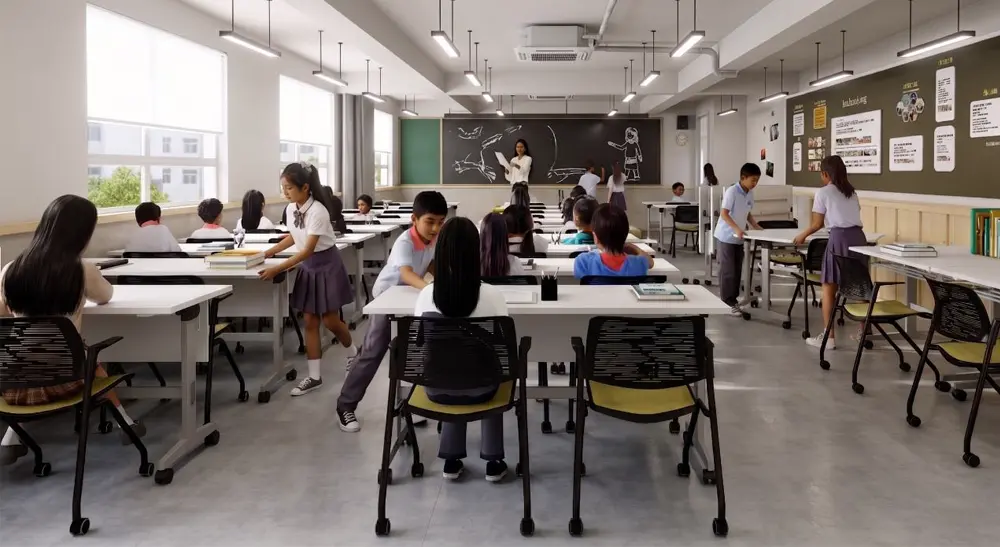
Flexible classrooms are designed around a simple principle:
The space should adapt to the learning activity—not the other way around.
A room can shift from:
- Lecture mode
- Group discussions
- Team projects
- Workshops
- Presentations
This adaptability makes the learning environment more responsive to educational needs.
Fixed Seating vs Flexible Classrooms
| Fixed Seating | Flexible Classrooms |
|---|---|
| Designed for lectures | Designed for multiple learning styles |
| Teacher-centric | Student-centric |
| Limited interaction | Encourages collaboration |
| Static layout | Adaptable layout |
| Efficient for exams | Effective for active learning |
| Difficult to reconfigure | Easy to reconfigure |
The comparison isn’t about determining a winner.
It’s about understanding which environment best supports modern learning outcomes.
What Educators Are Observing
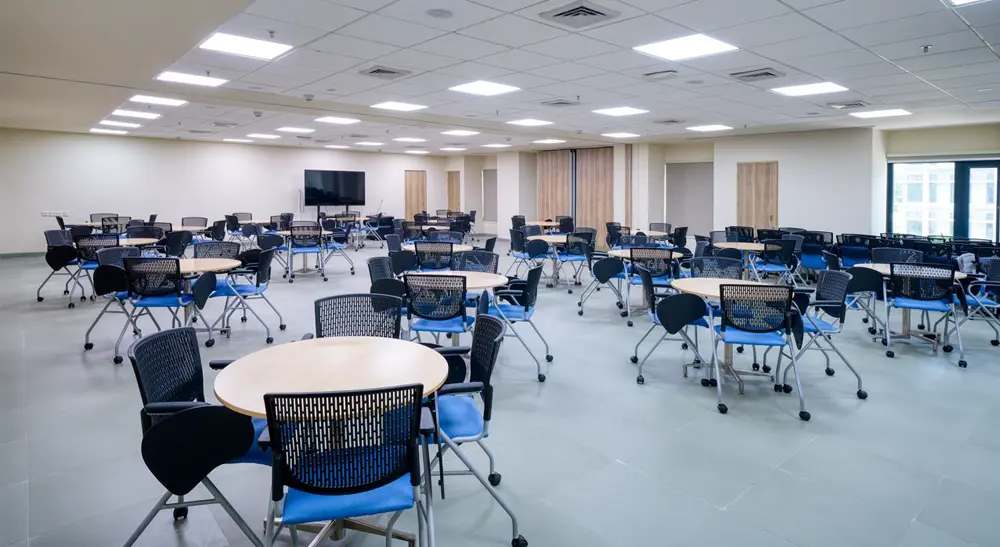
Across schools, colleges, and universities, educators are increasingly recognizing that learning is not a one-size-fits-all experience.
Students engage differently depending on:- Subject matter
- Learning style
- Group size
- Teaching approach
Flexible environments allow educators to adapt the classroom to the lesson rather than forcing the lesson to fit the room.
This creates opportunities for:
- Higher participation
- Better collaboration
- Increased engagement
- More dynamic teaching
Preparing Students for Future Workplaces
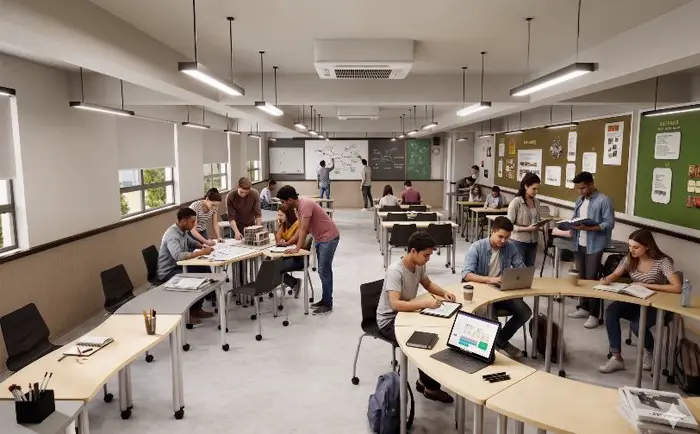
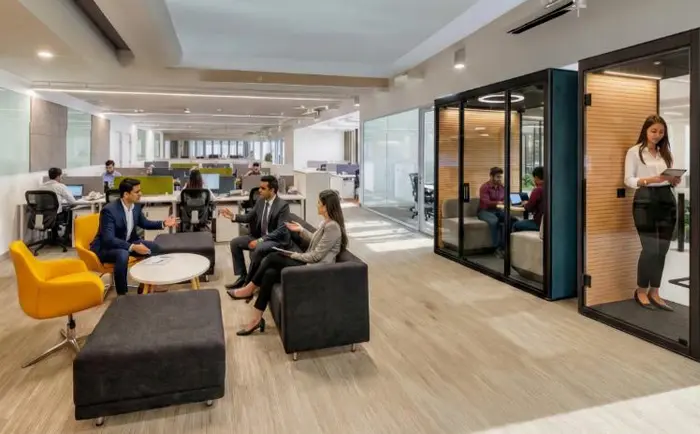
One of the strongest arguments for flexible classrooms is their connection to workplace readiness.
Modern offices are increasingly designed around:
- Collaboration
- Agility
- Teamwork
- Flexible working styles
Students who learn in adaptable environments become more comfortable working in similar settings later in their careers.
In this sense, classroom design is not just about improving education today.
It is about preparing students for the environments they will encounter tomorrow.
Furniture as an Educational Strategy
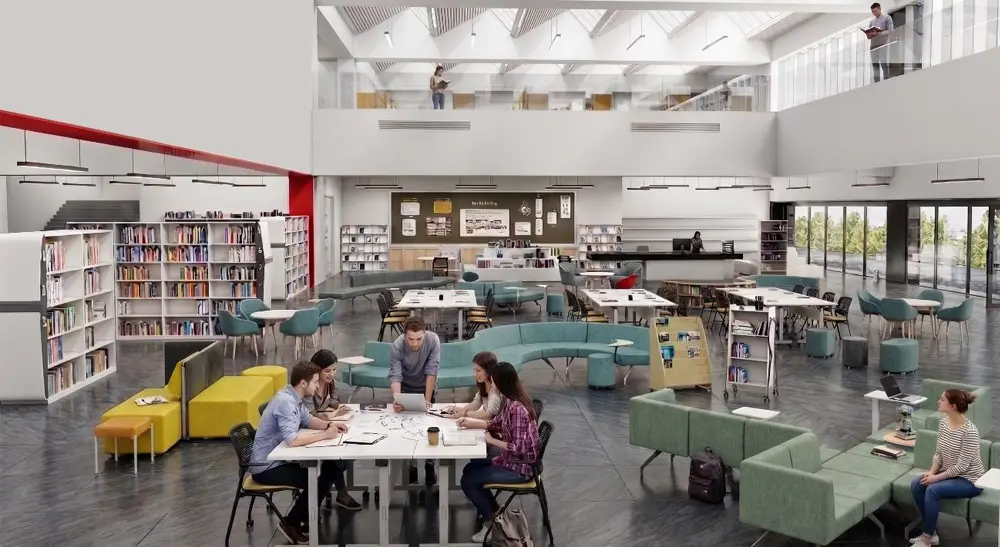
Furniture is often viewed as a procurement decision.
In reality, it is a strategic educational tool.
The right furniture can:- Enable collaboration
- Support multiple teaching methods
- Improve classroom utilization
- Enhance student engagement
- Create future-ready learning environments
Educational institutions that view furniture through this lens are better positioned to support evolving learning needs.
Conclusion
The debate is not about eliminating fixed seating entirely.
There will always be situations where structured layouts are appropriate.
However, as teaching methods continue to evolve, educational spaces must evolve alongside them.
Flexible classrooms provide educators with the ability to support multiple learning styles, encourage participation, and create more engaging learning experiences.
The most effective learning environments are not those that remain fixed.
They are the ones that can adapt as learning itself changes.